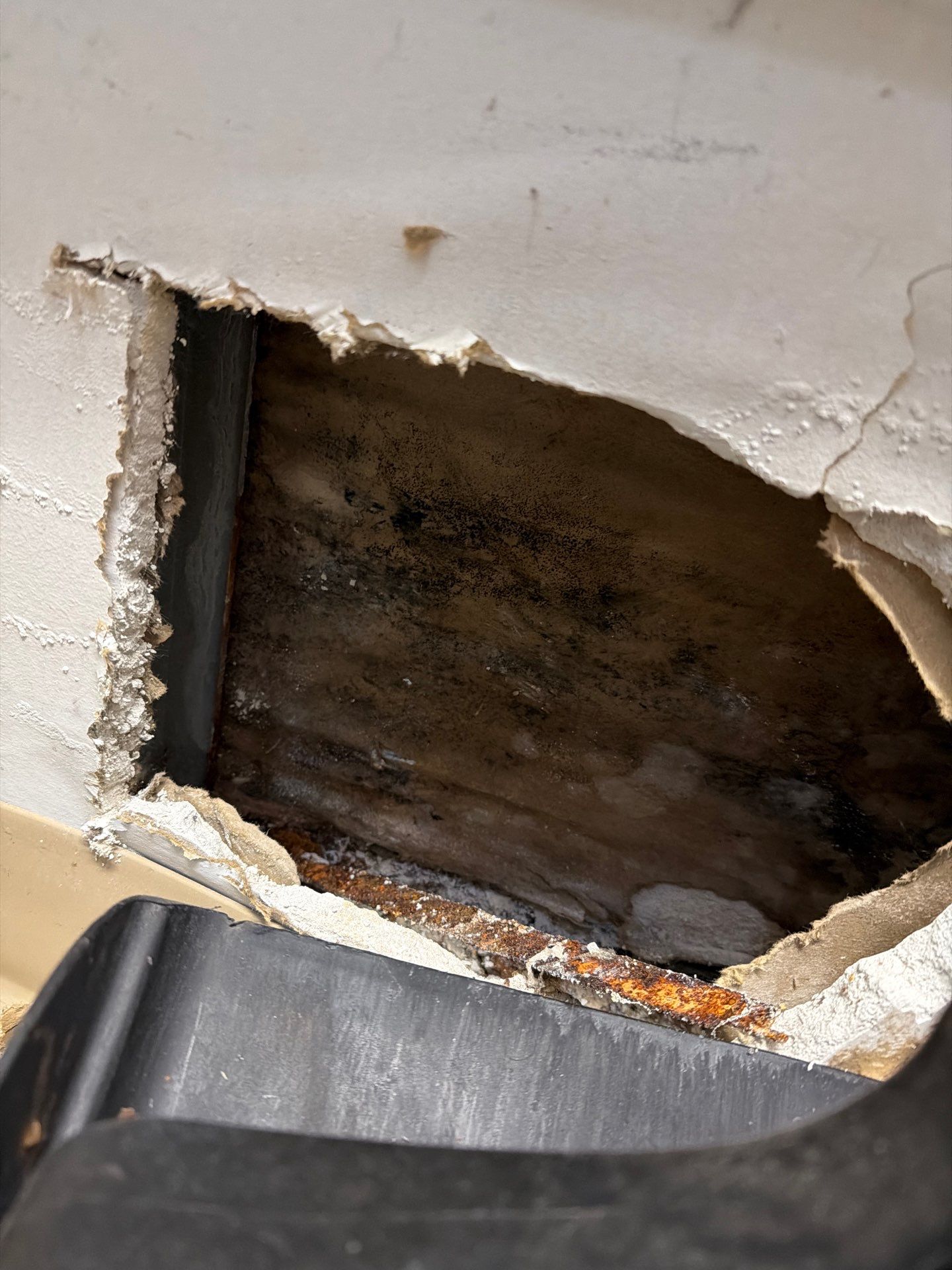
How do I know if my dishwasher leak actually damaged the floor?
Visible water is only one signal, and usually the latest one. Press the flooring directly in front of the dishwasher and to either side of the toe-kick. If it feels spongy, hollow, or shifts under your weight, the subfloor underneath is saturated. On hardwood, look for cupping (edges raised higher than the center of each plank) or crowning (the opposite). On laminate, swelling at the seams is a giveaway. On tile, tap each tile with a coin. A hollow sound where neighboring tiles ring solid usually means the thinset has released from a wet subfloor. We also bring penetrating moisture meters to every Cool Creek inspection because a floor can read dry on the surface while the plywood below holds 30 percent moisture content.
Pay attention to secondary clues too. Discolored or peeling baseboards next to the dishwasher, a faint warp in the cabinet toe-kick, or dark staining at the bottom edge of adjacent cabinet panels all point to water that has been migrating for a while. If you have a finished basement or a first-floor kitchen above a crawlspace, walk underneath and look at the joists and insulation directly below the dishwasher. Brown rings on drywall or sagging insulation batts tell you the leak has already passed through the subfloor and is working its way down.
Should I keep the dishwasher running or shut everything off right now?
Shut it off. Turn the breaker for the dishwasher off at the panel, then close the hot water supply valve under the sink (usually a small lever or knob feeding the braided line to the appliance). If you cannot find it, shut off the main water valve to the house. Pull the kick plate at the base of the dishwasher and look for active dripping at the inlet, the pump housing, or the door gasket. Place towels, but do not slide the dishwasher out yet if the floor is already soft. You can crack the connection lines if the unit rocks on a compromised subfloor.
Can my hardwood floor be saved or does it need to be replaced?
Sometimes yes, often no. Solid hardwood that has cupped but not crowned can occasionally be dried in place and then sanded flat once moisture levels stabilize, which can take 30 to 60 days. Engineered hardwood almost never survives because the layered construction delaminates once water hits the glue lines. Laminate is finished as soon as the core swells. Tile depends on the substrate: a healthy concrete slab usually dries and the tile stays, but tile over wood subfloor that has rotted needs to come up. We will give you a direct answer after the moisture mapping, not a guess. If we can save your floor, we will tell you. If we cannot, we will show you the readings ourselves.
One thing worth mentioning on hardwood: the species and finish matter. Older site-finished oak in Cool Creek bungalows often tolerates drying better than newer factory-finished maple or hickory, which uses tighter tongue-and-groove joints that trap moisture. If your floor was installed before the dishwasher (common in remodels), the planks usually run continuously under the appliance, which means we may need to remove the dishwasher just to access the wettest section. Plan for that conversation when you are weighing repair versus full replacement.
What about the subfloor, cabinets, and mold risk underneath?
This is where dishwasher leaks get expensive if handled wrong. Plywood and OSB subfloors hold water for a long time because they are sandwiched between the finished floor and the joists below. If the subfloor is not properly dried, mold can begin growing within 24 to 72 hours, especially in the warm, dark cavity under a sink base. We pull the kick plates on the dishwasher and adjacent cabinets, drill weep holes where needed, and force dry air through the cavity. If the leak ran long enough that you smell anything musty, that is not a minor cosmetic issue. The same drying urgency applies to washing machine floods and water heater failures, and we treat all three appliance categories with the same IICRC S500 standards.
Cabinets deserve their own attention. Particleboard sink bases and dishwasher-adjacent cabinets wick water upward through the bottom panels and side stiles. Once that material swells, it never returns to original dimensions, and the doors stop closing flush. Solid wood face frames usually survive if dried quickly, but the interior boxes often need replacement. We document each cabinet on the scope so your adjuster has a clear before-and-after, which matters when you are negotiating partial cabinet replacement against a full run.
How fast can Cool Creek Water Restoration actually get to my house?
For Cool Creek and the surrounding Central Indiana area, our standard response window is 60 to 90 minutes for true emergencies, 24 hours a day. We dispatch a lead tech with extraction equipment, meters, and air movers on the first truck so mitigation starts the same visit. You do not wait two days for a second crew to come back with dryers. If you call and we genuinely are not the right fit (wrong service area, wrong scope, or the job is small enough you can handle it yourself), we will tell you directly and point you toward the right resource.
Will homeowners insurance cover this in Cool Creek?
Usually yes for sudden and accidental discharge from a dishwasher supply line, pump, or internal hose. Most Cool Creek policies cover the resulting damage to floors, cabinets, and drywall, though the dishwasher itself is often excluded as wear and tear. Slow, long-term leaks that the adjuster determines were ignored can be denied. Document everything the moment you notice the problem: photos of the wet floor, the dishwasher interior, the supply line, and the cabinet underside. Save the appliance if possible so the adjuster can inspect it. We provide itemized scopes in Xactimate, the software most carriers use, which keeps approvals moving. If you want a full breakdown of how pricing and claims interact, our water damage restoration cost guide walks through line items in plain English.
What does the repair process actually look like?
When we arrive, we map the moisture footprint with thermal imaging and pin meters before anything gets torn out. That map tells us how far the water traveled under cabinets, into the wall cavity behind the dishwasher, and toward the dining room or basement ceiling below. Then we extract any standing water, remove unsalvageable materials (usually wet baseboards, lower drywall, and damaged flooring), and set up containment. Air movers and LGR dehumidifiers run for three to five days in most kitchens. We monitor daily and document drying logs your adjuster will ask for. Once the subfloor reads at equilibrium with the rest of your home, we move into reconstruction: new subfloor sections, underlayment, flooring, trim, and cabinet repairs if needed. Our full water damage restoration process for Cool Creek homeowners typically runs 7 to 14 days from first call to final walk-through on a contained dishwasher loss.