The First Response: What You Do in the Next Ten Minutes
Before anything else, kill the water. The dishwasher supply line ties into the hot water under the sink, and there is almost always a small shutoff valve right there. Turn it clockwise until it stops. If the valve is corroded or will not budge, shut off the main water supply to the house. Then kill power to the dishwasher at the breaker panel, not just by pressing the cancel button. Standing water and a live appliance is a combination that has hurt people.
Pull the racks out and sponge or wet vac the standing water inside the tub. Then look at the floor in front of the unit and along both sides of the adjacent cabinets. Press on the flooring. If it feels soft, springy, or sounds hollow when you tap it, water has already reached the subfloor. Open the cabinet under the sink and check the floor of the cabinet itself, the back wall, and the toe kick. A dry cabinet floor with a wet kitchen floor usually means the leak originated from the dishwasher side, not the plumbing side. That matters for insurance.
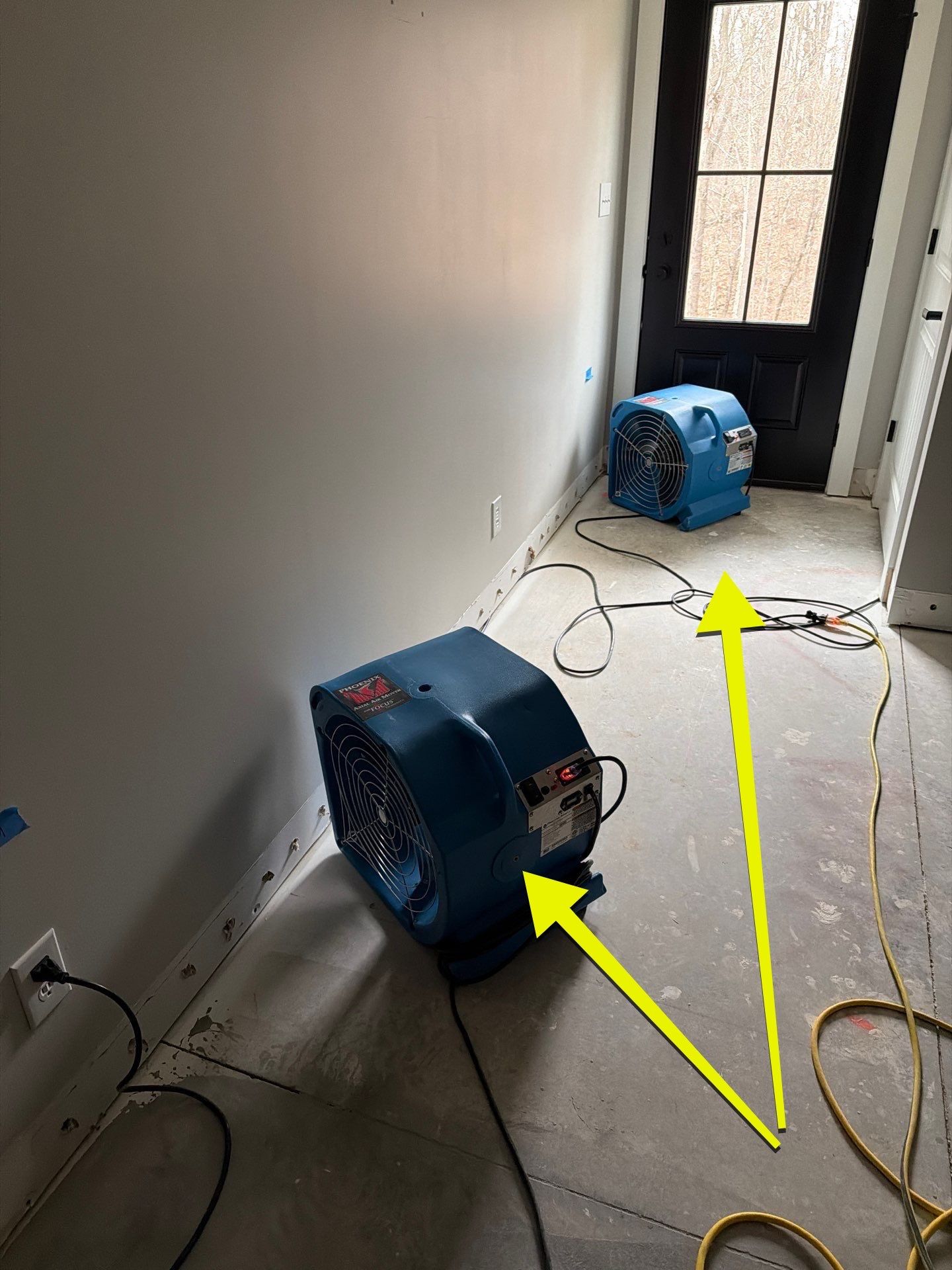
If you are seeing any of the warning signs, this is the point to call a professional. Quick mop ups feel productive, but trapped moisture under cabinets and behind the dishwasher will grow mold within 48 to 72 hours. Our crews dispatch to Cool Creek in most cases within 2 hours with moisture meters, thermal cameras, and extraction equipment. If we look at your kitchen and decide it is genuinely a DIY-scale spill, we will tell you directly and leave you with a plan.
The Comparison That Drives Every Decision
Not every dishwasher flood is the same event. The failure point determines the water category, the affected materials, and the realistic restoration scope. The table below reflects what we typically see across Cool Creek jobs. Read it as a decision framework: identify your scenario in the first column, then trace across to understand what you are actually dealing with before the first invoice arrives.
| Failure Type | Water Category | Common Affected Materials | Drying Time | Likely Demo | Insurance Outlook |
|---|---|---|---|---|---|
| Door gasket seep (slow, chronic) | Cat 1 progressing to Cat 2 | Toe kick, front edge of subfloor, lower cabinet face | 2-3 days | Toe kick only | Often denied as wear and tear |
| Drain hose leak | Cat 2 (grey, contains detergent and food residue) | Subfloor under unit, adjacent cabinet base, possibly drywall | 3-5 days | Toe kick, possibly cabinet base panel | Usually covered if sudden |
| Supply line burst during cycle | Cat 1 (clean, pressurized) | Subfloor, hardwood or LVP across kitchen, lower drywall, baseboards | 4-7 days | Flooring sections, baseboards, drywall bottom 12 to 24 inches | Typically covered, sudden and accidental |
| Overnight supply failure (8+ hours unattended) | Cat 1 spreading widely | Multiple rooms, ceiling below if upper floor, insulation, cabinet boxes | 7-14 days | Significant: flooring, cabinets, drywall, possibly ceiling below | Covered, but expect adjuster scrutiny on cabinet replacement |
Reading the Table: What It Means for Your Kitchen
The cost curve is not linear, and that is the most important takeaway. A drain hose leak and a supply line burst are both leaks, but the second one releases water under continuous household pressure and saturates a much larger area in the same hour. The jump from a contained gasket seep to an overnight supply failure is roughly twentyfold, and it almost always comes down to how long the water ran before someone noticed. We have walked into kitchens where a gasket had been weeping for eight months and the homeowner thought they were dealing with a $300 problem. By the time the toe kick came off, three lower cabinets were structurally compromised and the engineered hardwood had cupped six feet out from the dishwasher.
This is also where the category of water matters. A clean supply leak is Category 1, which means the affected materials can often be dried in place rather than torn out. A drain hose leak carries detergent, fats, and food particles, which pushes it into Category 2 territory and shortens the window before sanitization becomes mandatory. If you are unsure what those categories mean, our guide to water damage categories walks through the IICRC framework in plain English. The category drives the demo scope, the drying protocol, and frankly the bill. Category 1 water that sits for more than 48 hours degrades to Category 2 on its own, which is another reason the clock matters as much as the volume.
The demo column is where homeowner expectations usually collide with reality. Cabinets are the expensive surprise. Particleboard cabinet boxes wick water vertically, swell, and lose structural integrity within a day or two of saturation. Solid wood face frames may survive, but the boxes behind them often do not. The dishwasher itself is also frequently a write off after a supply failure, because the control board sits at the bottom of the unit and clean water still kills electronics. For deeper context on how subfloor decisions get made, the subfloor damage guide covers the moisture meter readings and replacement thresholds we use on every job. For supply line failures specifically, the same logic in our refrigerator water line leak article applies almost identically to dishwashers: small braided lines, big consequences.
Prevention That Actually Works
Replace the rubber supply line with a stainless braided line every five to seven years, sooner if you have hard water. Cool Creek water hardness varies by neighborhood, but mineral buildup accelerates gasket failure and corrodes brass fittings faster than most homeowners expect. Run the dishwasher only when someone is home and awake. Pull the unit out once a year, vacuum the toe kick area, and look for staining or mineral deposits on the floor behind it. Install a simple battery powered water sensor under the kick plate for about fifteen dollars. A smart sensor that pings your phone runs around forty dollars and pays for itself the first time it catches a slow leak at hour two instead of hour twelve. None of these steps are expensive. All of them have prevented jobs Cool Creek Water Restoration has had to invoice.